Why Successful People Never Skip Reading: 6 Powerful Reasons
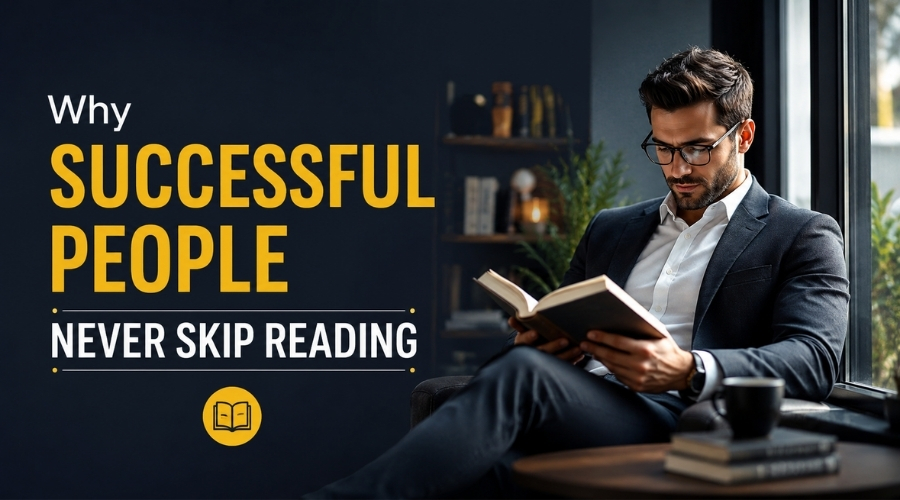
Ask anyone who's actually built something worthwhile — a career, a business, a reputation — and reading almost always comes up somewhere in the story. It's not a coincidence.
Reading rewires how you think, decide, and handle pressure over time. If you've ever browsed an online bookstore in India wondering whether that next book actually matters, here's the honest answer: it does, more than most people realize.
Key Takeaways
- Reading does more for your brain long-term than it does for stress in the moment.
- Fiction and nonfiction each pull their own weight — don't skip one for the other.
- A few minutes daily beats binging books once in a while.
- Swap some scrolling before bed to read and see what changes.
Top 6 Reasons Reading Matters So Much
None of these reasons are about sounding smart at a dinner party. They're about how your brain actually functions better, decade after decade, when reading stays part of your routine.
1. Reading Builds Cognitive Reserve and Sharpens Thinking
Your brain doesn't stay sharp on its own — it needs stuff that actually makes it work a little.
Every time you sit with a book that isn't easy, you're basically giving your mind a workout, and that effort builds up into something researchers call cognitive reserve, which is what keeps you thinking clearly even when life gets mentally rough.
2. Reading Reduces Stress and Supports Mental Wellbeing
There's a reason people say "let me just read for a bit" when they're stressed out. It genuinely pulls your head somewhere else for a while and boosts your mood even on a bad day.
Nearly 82% of adults who read regularly report lower stress levels. Regular reading is tied to better mental wellbeing over time, not just a quick escape from a rough day.
3. Fiction Enhances Empathy and Social Intelligence
When you read fiction, you're basically living inside someone else's head for a few hours — their fears, their bad decisions, their whole mess of life.
That habit of stepping into someone else's shoes on the page carries over into real life too, and it ends up making you noticeably better at reading actual people, which matters a lot more in leadership than people give it credit for.
4. Reading Compounds Knowledge and Improves Decision-Making
One book rarely changes your life. But top books always define an entire generation. It changes how people think, how markets move, how history repeats, and that is something which helps bring an evolution into society.
Successful people rarely make brilliant decisions out of nowhere; they're usually just pulling from a much deeper well of accumulated knowledge, often built one book from an online bookstore in India at a time.
5 Books That Can Change the Way You Think
Start Reading5. Lifelong Reading Is Linked to Slower Cognitive Decline
This one hits harder the older you get. People who don't stop reading through their 40s, 50s, and beyond just tend to hold onto their sharpness longer than people who quit picking up anything challenging once they're done with school or work.
Researchers have actually dug into this, and it's not just a placebo feeling. Older adults who read ≥1 time/week were about 40–46% less likely to show cognitive decline over 6–14 years compared with less frequent readers, even after adjusting for education and other factors.
6. Successful People Treat Reading as a Non-Negotiable Habit
It's never really about finding time, because they know books can change the way you think. To them, reading matters enough to make time for it.
The people who stay sharp for decades usually protect a small daily window for reading the same way they'd protect a workout or a meeting they can't miss.
One Shift that Actually Works
When you discover the Joy of Reading Printed Books in a World Full of Screens, you'll notice a drastic change in your mood and sleeping pattern.
Swap ten minutes of scrolling social media before bed for ten to fifteen minutes of focused reading, ideally a mix of nonfiction and something that genuinely challenges you. Always aim for about 3.5+ hours/week of reading. Track with a visible log.
The real payoff isn't some instant stress relief you'll notice tonight; it's the language, knowledge, and thinking ability that keeps compounding for years, long after any short-term relaxation wears off.
Conclusion
Nobody becomes sharp overnight, and reading isn't some trick that fixes that either — it's just the slow, boring habit that actually works if you stick with it long enough. The people who keep climbing year after year usually aren't reading to impress anyone; they're doing it because their brain simply works better when they do.
Grab whatever pulls you in, fiction or not, from an online bookstore in India or wherever's easiest, and just start. The book matters less than actually opening one.
Frequently Asked Questions
How much reading per day do successful people do?
Most aim for somewhere around 10-15 minutes at minimum, though many read closer to 30 minutes to an hour when time allows. Consistency matters far more than the exact number.
Is audiobook reading as effective as physical books?
Honestly, it depends on how you use it. If you're actually paying attention and not just letting it play in the background while you do five other things, audiobooks work almost as well as reading on paper. Where physical books tend to win a bit is memory — flipping back to a page or seeing where you are in a book seems to help things stick better for some people. But an audiobook during a commute still beats not reading at all.
Does reading really reduce stress, or is that just a feeling?
Both, honestly. People do report feeling calmer after reading, and there's genuine research backing reduced stress markers with regular reading — it's not purely psychological.
What type of reading is best for career growth?
Honestly, sticking to just one kind of book won't get you far. Nonfiction teaches you the actual skills and know-how you need, but fiction is what makes you better with people — reading a room, handling tough conversations, that sort of thing. You really need both if you want the full benefit.
Can reading help with anxiety or low mood?
It can, yeah, especially when it's just one piece of a bigger routine you're already working on. But if what you're feeling sticks around or gets heavy, a book isn't going to replace an actual conversation with someone qualified to help.